Contents
- 1 Essential Signs to Identify Wild Hogs in the Field
- 2 Understanding Wild Hog Movement and Preferred Locations
- 3 DIY Tracking Techniques and Simple Field Tools
- 4 Comparing Wild Hog Tracks to Deer Tracks
- 5 Common Challenges and How to Handle Them
- 6 Advanced DIY Tips for Better Success
- 7 Frequently Asked Questions About Tracking Wild Hogs
- 8 Using What You Learn in Real Field Scenarios
Learning how to track wild hogs with DIY methods boils down to understanding the signs they leave, their habitats, and their movement routines. I’ve spent time on both public and private land using simple methods to read the landscape for fresh hog activity.
I find that a mix of sharp observation and basic technology really gives a boost to success. Here’s my personal guide packed with practical tips and details for anyone who wants to try tracking wild hogs on their own.
Essential Signs to Identify Wild Hogs in the Field
My first step is always to look for clear evidence of hog presence in the area. Wild hogs are messy animals and leave behind obvious markers. The five main signs I look for include rooting, tracks, wallows, rubs, and scat. Knowing what each sign means can help anyone quickly figure out if hogs are around and active.
- Rooting: Hogs root up the ground using their snouts, looking for food like grubs and acorns. This disturbance often looks like someone ran a rototiller through the area. Fresh rooting will have moist, dark soil, while older rooting zones appear dry and crusty.
- Tracks: A wild hog’s track stands out because it’s rounded and nearly as wide as it is long. Both main hooves are blunt rather than pointed. Often, the dewclaws show up as side prints in mud due to their weight. I compare hog tracks to deer tracks, which are much more pointed and heart-shaped.
- Wallows: Hogs make shallow muddy depressions near water, then roll around to cool off and escape biting insects. Active wallows usually have fresh, wet mud. Sometimes they also have a strong scent from urine or droppings.
- Rubs: After covering themselves in mud, hogs will move to the nearest tree, log, or even fence posts to scratch off dried mud and remove bugs. I usually spot dark smears and coarse hairs stuck on the lower bark or wood, showing me both their size and where they like to hang out.
- Scat: Hog droppings are chunky, irregular, and much larger than deer scat. Sometimes I find hair, seeds, bits of bone, or shells in their scat, giving clues into what they’ve been eating.
These easy-to-spot clues can show not only that hogs are nearby but can even hint at how recently they passed through. If you’re exploring new ground, always start by walking near water sources, as hogs can barely go a day without water, especially in warm climates.
Understanding Wild Hog Movement and Preferred Locations
I pay close attention to where hogs want to eat, drink, and hide during the day. Wild hogs search for food throughout the night and early morning. They visit agricultural fields, oak stands, and muddy ponds for their basic needs. By focusing on where water and thick cover overlap, I can increase my odds of finding fresh sign.
Trails pushed through tall grass or brush often lead me to “bedding areas,” which are thickets or palmetto patches that hogs use to hide. These game trails can be wide, muddy, and pocked with hoof prints. I look for where several trails come together, as these become natural gathering spots for hog groups.
In some cases, wild hogs build small “nests” out of grass or leaves for their piglets. If you spot such locations, take care not to disturb, but mark the area as a place with ongoing hog activity. Seasonal patterns also play a role—hogs might be more visible in agricultural areas right after a harvest when leftover crops are abundant.
DIY Tracking Techniques and Simple Field Tools
Staying low-tech actually works in my favor. I rely on a mix of old-school woodcraft and a few basic tools:
- Trail cameras: I hang trail cameras on likely trails or near wallows to catch hogs moving at night. Noncellular cameras record images or video to a memory card, while basic cellular options can notify me of movement in real time. Reviewing camera data helps me spot hog activity patterns without needing to be present all hours.
- Marking locations: Using a GPS app or marking trees with duct tape keeps me from losing my place and helps me track hog movement over time. I jot down dates and fresh signs so I can spot new trends.
- Cover scent: When checking cameras or scouting on foot, I always move from the downwind side and sometimes use unscented or rubber-bottom boots to keep my scent out of the area.
- Flashlights and headlamps: Since hogs move mostly at dawn, dusk, and night, I bring a red or green lamp to avoid spooking them with bright white light.
When legal and appropriate, I sometimes bait an area with a DIY corn mixture—soaked in fruit drink and yeast. This lures hogs to the camera or a specific location so I can watch their movements more closely. I always check my state and local regulations before using bait, as the rules can be strict and vary a lot region by region. Another handy DIY tool is a simple drag, a burlap sack tied to a rope, which you can drag along trails to check for fresh tracks the next day.
Comparing Wild Hog Tracks to Deer Tracks
Sometimes I need to sort out whether a track belongs to a hog or a deer. I’ve put together some key things I look for every time I’m in the field.
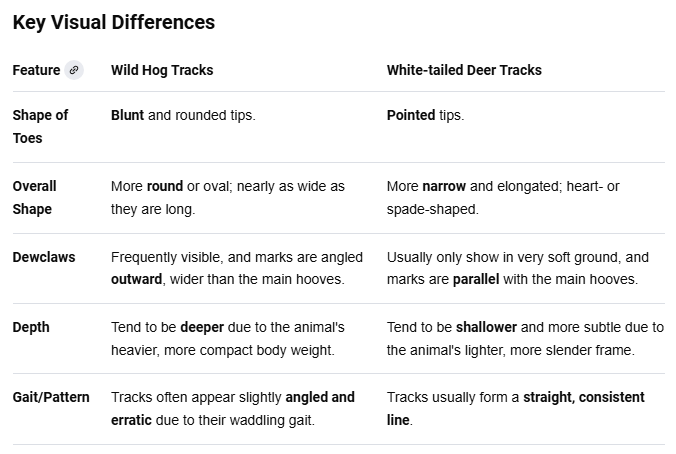
I always look for other nearby clues, like rooting or rubs, to help confirm—never just rely on track shape alone. Sometimes you might even spot both track types overlapping, especially near major water or food sources. This tells you about the diversity of wildlife using an area.
Common Challenges and How to Handle Them
Tracking wild hogs comes with its own set of roadblocks. The trickiest part in my experience is their unpredictable patterns. Sometimes they show up several nights in a row, only to vanish for a week or more. Weather, pressure from hunters, and changes in food sources will all push hogs to mix up their routine. Here are a few ways I try to avoid common pitfalls:
- Hogs can be nocturnal: I have the most luck hunting or tracking at night or dawn, using red light flashlights and checking cameras at midday to keep disturbance low.
- Scent control is really important: Their noses are impressive, so I wear rubber boots and keep my clothes as scent-free as possible.
- Legal restrictions: Each state and county can have different rules on baiting, night tracking, and removal. I always check with local wildlife officials or agency websites before planning any activity.
Other challenges include rough terrain and navigating thick brush, especially in southern habitats. Wearing long sleeves, sturdy pants, and snake-resistant boots can limit risks from thorns and wildlife you might stumble upon along the way.
Using Weather and Season to Your Advantage
During cooler months, hogs are more willing to move during the daytime. Food scarcity in late fall or winter pushes them into more open spaces and can make them easier to find. After rainstorms, their tracks and rooting show up easily in the soft mud. In summer, I check water holes frequently since they need to cool down and will gather in shady, damp areas. Drought periods, especially in late summer, concentrate hog activity around even the smallest ponds or trickling creeks. These bottlenecks are excellent sites for setting up a trail camera.
Advanced DIY Tips for Better Success
Once I’m comfortable recognizing signs and using cameras, I try more advanced tactics to increase my odds. Here are a few I’ve found useful:
- Patterning groups, not just individuals: Hogs travel in social groups known as sounders. By studying cluster scat, multiple wallows, and track sizes, I figure out both the number and types (adult sows, shoats, or big boars) using the area.
- Mapping activity over time: I keep notes on which locations have the freshest sign and which get cold. This “hot spot” mapping makes my future scouting more efficient. It can also help predict movement if conditions like weather or farming operations change.
- Using game calls: Sometimes I try predator sounds, or piglet distress calls to pull hogs out of cover. While this is more advanced and takes some practice, it can be effective for quick encounters. Just remember, not all hogs will respond the same, especially older, wiser boars. Adapt your strategy as you gain more experience.
Occasionally, I also use tracking powder (a safe, non-toxic white flour or sand) if the soil is dry and tracks aren’t showing up well. Sprinkle lightly and check back after a night or two; fresh marks can tell you the exact direction of their movement.
Frequently Asked Questions About Tracking Wild Hogs
I get asked these a lot, especially by friends new to hog tracking:
How can I tell if wild hogs are nearby?
Look for fresh rooting, muddy wallows, wide and blunt hoof prints, or big piles of irregular scat. A strong musky odor sometimes hangs in dense thickets, too.
What’s the best time of day to track hogs?
Early mornings, late evenings, and after midnight tend to be most productive, especially when it’s cool and quiet.
Do wild hogs use the same trails every day?
Often, yes, especially between reliable food and water. However, if they sense pressure or disturbance, they can change routes in a flash.
Is tracking wild hogs dangerous?
Tracking itself isn’t risky if I keep my distance and stay aware. Avoid close encounters with large boars or cornered groups, and always let someone know where you’re going. Carrying a whistle or two-way radio adds extra safety, especially on public land.
Using What You Learn in Real Field Scenarios
Real-life tracking comes down to reading every bit of sign and using it to adjust my plan on the fly. On one public land hunt, I found fresh rooting under a chinquapin oak, muddy wallows nearby, and a wide, well-used trail heading into thick blackberry brambles. I set my trail camera, stayed out of the area for three days, and when I returned, I caught five hogs on camera at midnight. Taking the time to read and layer each clue really gave my results a boost.
Putting these details and habits into practice can make a big difference. With patience and a sharp eye, DIY tracking opens up a clear window into wild hog behavior and gives you a better shot at a safe, successful, and eye-opening adventure.
If you’re eager to get started, find a local wildlife spot, grab your basic gear, and start looking for those first clues. The more time you spend in the field, the better you’ll get at reading the wild hog script the land is writing every day.
Most Recent Articles:
- How To Pack A Lightweight Backpack For DIY Backpack Hunting Trips
- Navigating The Hunt Application Process In The US

- Kodiak Canvas Cabin Lodge Tent

- Safety Tips For Hiking In Bear Country
- Camping And Hiking In The South San Juan Wilderness Of Colorado
- DIY Devils River Kayak Trip

As always, stay safe, enjoy the journey, and please try to leave it cleaner than you found it. If you have any comments, questions, ideas, or suggestions, please leave them in the comment section below, and I’ll get back to you ASAP. You can follow us on YouTube: Man Art Creations for videos of our DIY Adventures.
P.S. Thanks so much for checking out our blog; we really appreciate it. Just so you know, we may receive a commission if you click on some of the links that appear on our site. This helps us keep our content free and up-to-date for everyone. We appreciate your support!