Contents
- 1 Foundational Gear for Public Land Mule Deer Hunting
- 2 Pre-Season Scouting and Choosing a Public Land Mule Deer Hunting Area
- 3 Effective Glassing and Stalking Techniques for Public Land Mule Deer Hunting
- 4 Smart In-Season Public Land Mule Deer Hunting Tactics
- 5 Staying Quiet, Scent-Free, and Persistent
- 6 Advanced Strategies for Public Land Mule Deer Hunting
- 7 Frequently Asked Questions on Public Land Mule Deer Hunting
- 8 Final Thoughts on Public Land Mule Deer Hunting
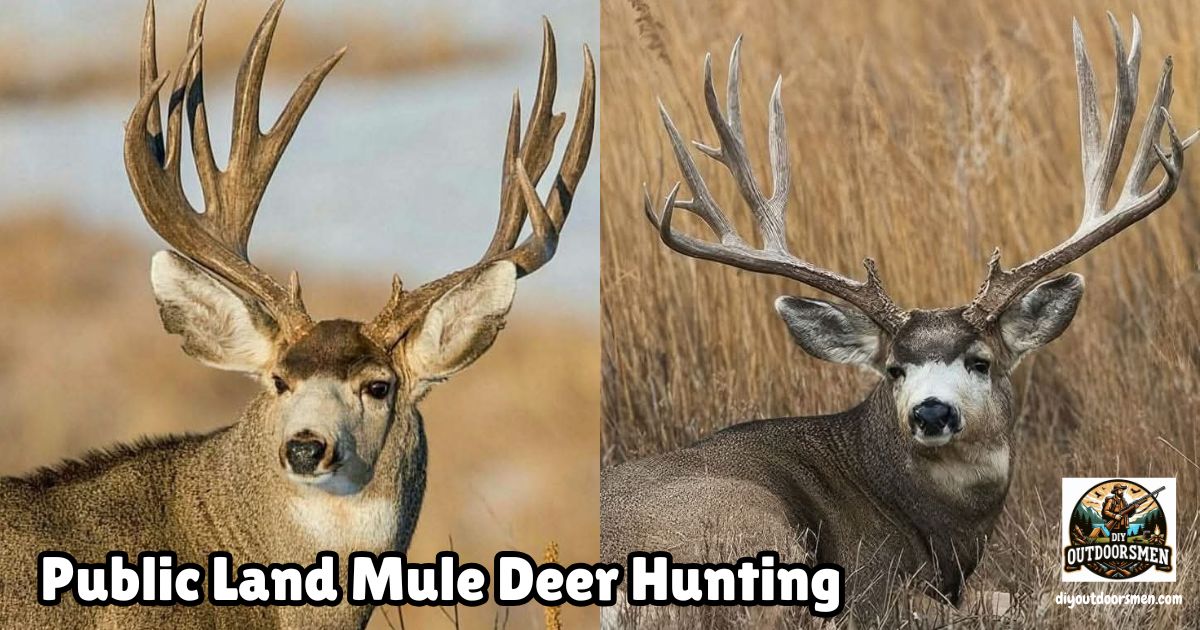
Public land mule deer hunting is an experience that requires not just physical commitment but also a patient, thoughtful approach. Competing with other hunters, unpredictable weather, and the natural wariness of mule deer make this type of hunt both challenging and rewarding. Drawing on what I’ve learned over years of chasing these wary bucks, I’m sharing my go-to tactics and practical tips to help you increase your odds of success on public ground.
QUICK LOOK: Tips for Public Land Mule Deer Hunting
- Use Topography: I focus on habitat features like steep slopes, broken timber, benches, and rimrock. Mature bucks tend to bed where they can get early warning of danger and have good escape cover.
- Glass for Sign: I look for places with fresh droppings, old rubs, and narrow crossings along benches or creek bottoms. Even trails beaten down by deer hooves give clues.
- Water Is Key: In drier regions, water can really concentrate deer movement. Small seeps, springs, or wallows often attract bucks, especially in late summer and early fall when water is scarce elsewhere.
- Go Slow: When glassing, I avoid rushing. I break up the landscape into small sections and scan each piece carefully. The flick of an ear or the glint of an antler is often all I see at first.
- Use a Tripod: I mount my binoculars or spotting scope on a tripod for stability. Fatigue-free viewing is possible for hours, and I spot details I’d miss by hand-holding my optics.
- Focus on Edge Cover: Shady spots near the boundary between timber and open slopes often draw bedded bucks, especially in midday heat.
- Stay Downwind: Mule deer survive because they trust their noses. I check wind direction constantly, sometimes with a bottle of powder or even a handful of dirt thrown in the air to see which way the breeze is drifting.
- Use Terrain Carefully: Dry creek beds, rock outcrops, and brush patches let me stay hidden while closing the distance. Moving slowly and watching each step for noisy sticks or gravel is super important. One obvious sound and the hunt is over.
- Hunt All Day: Deer don’t vanish at noon. Midday can be surprisingly productive as other hunters give up and the woods quiet down. I’ve spotted mature bucks get up to browse or shift beds between 11 a.m. and 2 p.m. when most people are back at camp.
- Move Smart, Not Fast: If I’m not seeing action from one glassing knob, sometimes a short move to another ridge or drainage opens up a whole new view, revealing undisturbed deer.
- Focus on Fringes: Bucks love transition zones, edges where open sage meets dark timber or brushy washes cut the hills. These are the first spots I glass, especially during the rut when bucks cruise for does but don’t want to be seen.
- Adjust to Pressure: If a drainage gets hit hard by other hunters, bucks usually don’t go far; they just retreat to thicker or steeper cover. Pinpointing these hiding spots with careful glassing or even stillhunting through timber during the quietest parts of the day can make all the difference.
- Follow the Rut: During the rut, bucks are more predictable as they seek does. I key in on areas does are using, like southfacing slopes, sage flats, or lower benches near water.
- React to Weather: Snow, rain, and wind all change deer patterns. Fresh snow shows tracks and lets me see where deer are moving. Wind lets me be a little bolder with stalking, as it hides some sound and covers my approach more effectively. After a big weather system, deer often feed in the open for longer, making glassing especially effective.
Foundational Gear for Public Land Mule Deer Hunting
The right gear makes a tangible difference in mule deer hunting. Starting with reliable boots is key, since I often put in many miles trekking steep, rocky slopes and through brush. Layered clothing that works across a wide range of temperatures is essential. Weather on public land can switch up quickly, and mule deer are most active at dawn and dusk, so I usually face both cold and warm conditions in a single day.
Quality optics, especially binoculars in the 10x or 12x range and a steady spotting scope, are as valuable as any rifle or bow. Using a backpack that fits well, carries enough water, and has room for extra layers, food, and gear lets me stay out longer without discomfort.
Many hunters, including myself, rely on hunting apps like onX Hunt or BaseMap for offline maps, land ownership boundaries, and topo overlays. I also carry a physical map and compass as a backup, since battery failure or bad service isn’t unheard of in the backcountry. Small things like an emergency bivvy, spare headlamp batteries, and a first aid kit are not just add-ons but necessities in unpredictable terrain.
Socks are another detail worth mentioning. Merino wool socks help avoid blisters, wick moisture, and cut down on odor after long days. I always carry an extra pair. Gaiters can stop rocks and seeds from getting into boots, making every mile a little more comfortable. For those hiking in before first light or after dark, trekking poles save knees on steep descents and help balance heavy packs.
Pre-Season Scouting and Choosing a Public Land Mule Deer Hunting Area
Public land mule deer hunting starts well before opening day. I always begin by combing through maps and satellite images. Scouting virtually saves fuel and time, letting me pinpoint likely bedding areas, feeding grounds, water, and escape routes.
When I narrow down a unit, I pay close attention to overlooked spots. Not every buck lives 10 miles back from the road. Some of the best deer I’ve spotted were less than two miles from the truck, just off the main trails where most hunters walk right past.
- Use Topography: I focus on habitat features like steep slopes, broken timber, benches, and rimrock. Mature bucks tend to bed where they can get early warning of danger and have good escape cover.
- Glass for Sign: I look for places with fresh droppings, old rubs, and narrow crossings along benches or creek bottoms. Even trails beaten down by deer hooves give clues.
- Water Is Key: In drier regions, water can really concentrate deer movement. Small seeps, springs, or wallows often attract bucks, especially in late summer and early fall when water is scarce elsewhere.
Scout both in-person and virtually as the season approaches. Trail cameras add another layer of information, but I never rely just on them, since public land traffic can mean tampering or theft. Instead, I use my own observations to make the final plan.
Observing deer patterns at sunrise and sunset during late summer can clue you in on seasonal movement that carries over to hunting season. Don’t overlook talking to local biologists or game wardens—sometimes they’ll point out overlooked habitats or recent changes that can give you an edge.
Effective Glassing and Stalking Techniques for Public Land Mule Deer Hunting
Mule deer are experts at disappearing, even in open terrain. That’s why I’ve made glassing the backbone of my hunts. Setting up on high points at first or last light lets me scan wide areas without bumping deer.
- Go Slow: When glassing, I avoid rushing. I break up the landscape into small sections and scan each piece carefully. The flick of an ear or the glint of an antler is often all I see at first.
- Use a Tripod: I mount my binoculars or spotting scope on a tripod for stability. Fatigue-free viewing is possible for hours, and I spot details I’d miss by hand-holding my optics.
- Focus on Edge Cover: Shady spots near the boundary between timber and open slopes often draw bedded bucks, especially in midday heat.
When it’s time to stalk, patience and wind awareness matter most. I always wait for a buck to bed in a visible location before even thinking about making a move. Rushing in while deer are feeding or alert leads to blown opportunities.
- Stay Downwind: Mule deer survive because they trust their noses. I check wind direction constantly, sometimes with a bottle of powder or even a handful of dirt thrown in the air to see which way the breeze is drifting.
- Use Terrain Carefully: Dry creek beds, rock outcrops, and brush patches let me stay hidden while closing the distance. Moving slowly and watching each step for noisy sticks or gravel is super important. One obvious sound and the hunt is over.
Sometimes I purposefully watch a buck for several hours, tracking his patterns and seeing which way he likes to exit beds. Glassing buds or ear twitches at three hundred yards is a skill honed by experience. When stalking, crawling on knees or even belly sometimes makes the difference between success and another blown stalk. Don’t forget, patience and observation for just a bit longer often works better than getting impulsive.
Smart In-Season Public Land Mule Deer Hunting Tactics
Public land mule deer are survivors. Hunting pressure will push bucks into out-of-the-way places or into habits that avoid people. Persistence, patience, and adaptability matter more than any gadget.
- Hunt All Day: Deer don’t vanish at noon. Midday can be surprisingly productive as other hunters give up and the woods quiet down. I’ve spotted mature bucks get up to browse or shift beds between 11 a.m. and 2 p.m. when most people are back at camp.
- Move Smart, Not Fast: If I’m not seeing action from one glassing knob, sometimes a short move to another ridge or drainage opens up a whole new view, revealing undisturbed deer.
- Focus on Fringes: Bucks love transition zones, edges where open sage meets dark timber or brushy washes cut the hills. These are the first spots I glass, especially during the rut when bucks cruise for does but don’t want to be seen.
The spot-and-stalk approach keeps me involved and challenges my patience. Waiting for the right shot with the deer unaware of my presence is intensely satisfying. Rushing rarely pays off. I’ve learned to back off if things start to go wrong, choosing to try again rather than push and spook every deer out of the drainage.
Always watch for patterns in hunting pressure. Are camps moving in from nearby access points, or is an area seeing a lot of traffic? If yes, reevaluate your plan and roam farther or remain on stand longer in overlooked sections. Don’t be afraid to hunt uncomfortable spots: dense timber, brush-choked gullies, or steep faces often hold bucks when open ground is pressured. Flexibility and willingness to adapt your plan pay off here.
Staying Quiet, Scent-Free, and Persistent
Sound travels much farther in the cool, still air of early morning and evening. I move deliberately, pausing often and listening as much as I look. Clothing that doesn’t swish or rustle is part of my kit, and I avoid loose objects clanking in my pockets or backpack.
Walking with slow, measured steps and freezing when I hear unexpected sounds keeps the deer unaware of my presence. Even accidentally tapping glass against a tripod can set everything back. Staying as scent-free as possible is important for all hunters, not just archery folks.
Mule deer don’t forgive mistakes with wind direction or strong, unnatural smells. That’s why I pack away scented snacks, avoid using scented soaps or deodorants, and even air out my clothing before hunts. I always carry extra socks to avoid strong foot odor, which may sound strange, but it really helps after several days in the same boots.
Persistence is the difference between going home empty and coming back with a story to remember. I’ve had hunts where I went three days without seeing a single shooter buck, only to find one on the last day because I kept at it.
Getting discouraged is easy, but keeping at it turns tough hunts into success stories. Even glassing empty hills teaches something useful about deer patterns or hunting pressure, so every outing is part of a larger trapline of knowledge for the future.
Advanced Strategies for Public Land Mule Deer Hunting
Learning when to move and when to sit still comes with experience, but I always watch for signs of changing deer behavior. Increased hunting pressure, early snowfall, or rut activity can all change how and where bucks move.
- Adjust to Pressure: If a drainage gets hit hard by other hunters, bucks usually don’t go far; they just retreat to thicker or steeper cover. Pinpointing these hiding spots with careful glassing or even stillhunting through timber during the quietest parts of the day can make all the difference.
- Follow the Rut: During the rut, bucks are more predictable as they seek does. I key in on areas does are using, like southfacing slopes, sage flats, or lower benches near water.
- React to Weather: In later seasons, snow, rain, and wind can all change deer patterns. Fresh snow shows tracks and lets me see where deer are moving. Wind lets me be a little bolder with stalking, as it hides some sound and covers my approach more effectively. After a big weather system, deer often feed in the open for longer, making glassing especially effective.
Public land mule deer hunting success comes down to strategy, patience, and flexibility. Tunnel vision on just one buck or spot can keep you from seeing opportunities. Being open to change, based on what deer, weather, and other hunters are doing, is just as important as any planning you do before the season. Sometimes, trying a new glassing knob or walking into an overlooked pocket of cover opens up a world of opportunities you’d miss by sticking stubbornly to a single plan.
Frequently Asked Questions on Public Land Mule Deer Hunting
Here are a few questions I get often from hunters new to public land mule deer hunting:
How do I find overlooked areas that hold bucks?
Pay attention to smaller pockets of rough country between main access trails, narrow strips of timber, or breaks in terrain that are easy to walk past but hard to see into. I’ve found some of my best bucks in places most people ignore after hiking a mile from the road. Watching deer cross open areas into hidden pockets at dawn or dusk can reveal routes you’d miss with a quick scan.
What’s your top tip for stalking mule deer?
Wind awareness is my number one advice. I never approach a deer unless I know the wind is right, even if the distance looks short or the shot seems easy. Mule deer can smell danger from very far away, and their first and only reaction is often to vanish for good.
How do you stay motivated during tough hunts with very little deer activity?
I break the hunt down into smaller goals, like learning something new about the area, glassing a new drainage, or just spotting deer sign. Focusing on progress rather than just the outcome keeps me involved. Bringing a friend or taking photos of cool scenery along the way also helps keep spirits up. Remember, every day hunting is a win, even if you’re not filling a tag. Sharing stories and small discoveries makes even hard hunts memorable.
Final Thoughts on Public Land Mule Deer Hunting
Public land mule deer hunting has taught me more about patience, strategy, and respect for wild places than just about any other experience. Every hunt brings a new lesson, and every hard-earned buck is a result of persistence and thoughtful planning.
The challenge is real, but that’s exactly what makes every success so satisfying. Preparation, flexibility, and a commitment to keep hunting are what put deer on the ground—and stories to share for years to come.
Most Recent Articles:
- Complete Guide On Tracking Game Animals
- DIY 4-Step Guide To Field Dressing And Quartering A Deer
- Night Vision Binoculars For Nocturnal Hunting
- The Science Behind Camouflage Patterns For Deer Hunting
- Binocular Accessories For Hunters

- 9 Tips for Using Trail Cameras To Track Deer Movements

As always, stay safe, enjoy the journey, and please try to leave it cleaner than you found it. If you have any comments, questions, ideas, or suggestions, please leave them in the comment section below, and I’ll get back to you ASAP. You can follow us on YouTube: Man Art Creations for videos of our DIY Adventures.
P.S. Thanks so much for checking out our blog; we really appreciate it. Just so you know, we may receive a commission if you click on some of the links that appear on our site. This helps us keep our content free and up-to-date for everyone. We appreciate your support!