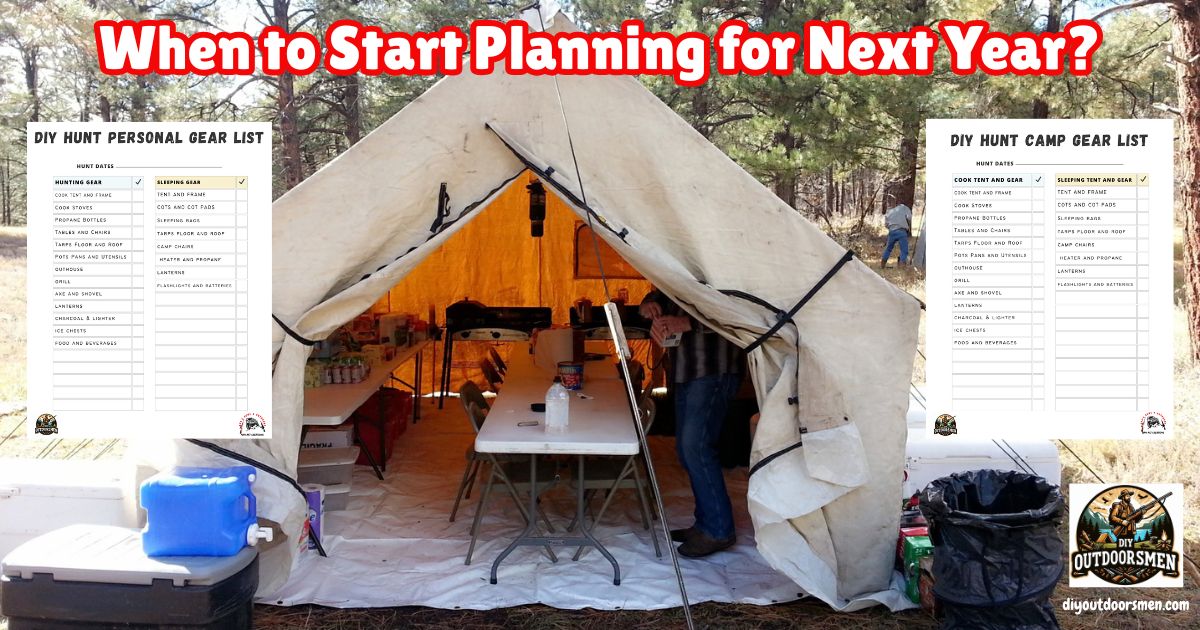
Planning for a successful hunt next year starts earlier than many people think. From reflecting on last season to securing tags and getting gear ready, early planning has made a big difference for me, and I’ve seen how being proactive helps avoid trouble and disappointment.
QUICK LOOK: Hunt Planning Tips and Pitfalls
- Calendar Everything: Keeping a hunting calendar of tag deadlines, final application dates, and trip windows helps me stay on track and avoid nasty surprises.
- Stay Flexible: I keep backup plans for alternate states or public lands in case draws don’t go my way. Having a couple of ideas up your sleeve reduces stress and makes sure you still get out there.
- Budget Early: Tag fees, gear upgrades, travel, and food all add up. I start budgeting in winter so nothing sneaks up on me. Sticking to my budget means I can jump on any late-breaking opportunities without regret.
- Network: Reaching out to local hunters or biologists for the area I plan to hunt often gives me insights I can’t get from maps alone. Local folks usually know the best spots and can warn me about changes I might not spot myself.
- Document Everything: I save emails, confirmations, and receipts for permits and bookings to avoid paperwork headaches later. Keeping digital and paper records is a habit that pays off season after season.
Every year, popular hunting spots fill up fast, tag deadlines come and go, and it’s easy to overlook the details if you wait until the last minute. Here’s my approach for getting everything lined up for next season, based on lessons learned out in the field and talking with other hunters.
Why Early Planning Makes a Difference
I start my planning right after the season ends, when memories from the hunt are still fresh. I want to make the most of what I’ve learned and make sure I don’t repeat mistakes. If I put things off, opportunities can slip by—especially with tag applications, which often open well before summer arrives.
The whole process, from securing the right permits, improving property (if you hunt private land), booking guides or trips, and tuning up gear, has a timeline that often starts months in advance. When I skip early planning, I end up with limited options, higher travel costs, and sometimes even the wrong tags.
So, I approach each piece of planning with a calendar in hand, knowing that good prep work stacks the odds in my favor for the next hunt. Early planning also means I can spend more time checking out new hunting areas, tracking down top gear, and talking with experienced hunters to top off my knowledge base and game plan for next year.
Off-Season Reflection and Goal Setting (December–February)
The off-season, right after the final day of hunting, is a valuable time for self-reflection. I take a day or two to write down which strategies, locations, and tactics worked, and where things fell short. Sometimes, my shot placement was off. Other times, I wished I had a better treestand.
This is when I make a list of skills I want to improve and set my main hunting goals for next year. For some hunters, that might mean filling a tag in a new state, chasing a different species, or finally taking that dream hunt on public land. Setting clear goals in winter keeps me motivated even when hunting season feels far away.
Habitat and Land Work
Anyone with access to private land should use the offseason to their advantage. I work on clearing shooting lanes, repairing stands and blinds, or even starting new food plots if I have permission. Starting these projects early avoids the mad rush of early fall, and I don’t run the risk of disturbing the area too close to the hunt. For those who hunt with friends or family, teaming up to improve habitat boosts the odds for everyone, as well as gives you a good excuse to spend time outdoors before opening day.
Gear Inventory
As soon as the season wraps up, I go through all my hunting equipment. I check bows, rifles, optics, and clothing for damage or excessive wear. I clean, repair, or replace anything that might cause trouble next season.
I also make sure that all rechargeable batteries are out of electronics and stored properly—nothing’s worse than corroded gear when I pull it out months later. I take stock of ammo, tags, calls, and other key items, and restock any supplies that ran low. A well-organized gear closet can save a ton of frustration next season.
Preference Points and Records
I also make time to update my preference points and log into state wildlife systems to check my status. If I missed any postseason reporting or harvest surveys, I take care of them right away, since missing those can lead to being disqualified from future draws.
Keeping a spreadsheet of states, species, and points helps me keep everything straight and avoid missing out years down the line. Over the years, being thorough with records has saved me from headaches and last-minute surprises.
Spring Tag Applications and Research (March–May)
Come spring, most western states open their application periods for deer, elk, and other big game draws. In my experience, missing these deadlines means I’ll have to wait another year or settle for less popular units.
I calendar the opening and closing dates for the states and species I’m pursuing. If I’m interested in bucket-list hunts, like a trophy Wyoming elk or Iowa whitetail, this step is super important, since preference points often build up over many years.
Choosing Destinations
Spring is also when I look at new lands or outfitters I want to try. I research public lands, read up on success rates, access points, and pressure from other hunters. When I consider a guided hunt or lease, I contact the outfitter early because the best dates get booked first.
Research for me involves forums, local wildlife biologist reports, old harvest stats, and satellite imagery. If I’m interested in hunting unfamiliar terrain, I dig into topographic maps and talk to anyone who has firsthand experience there. All this background work helps me pick the best destination for the kind of hunt I want.
Booking Travel and Lodging
If I’m hunting out of state, I start making my travel plans and lodging reservations in the spring. This gives me better rates and choices, and I can align my vacation time with opening day. Early bookings also give me more flexibility if units or tag choices change during the draw results. I always double-check cancellation policies and make sure my travel schedule fits with my hunting timeline.
Summer Preparation and Digital Scouting (June–August)
The summer months are all about putting plans into action. As tags start showing up, I shift focus to physical prep and digital scouting. With the weather warming up, it’s the best window for practicing shooting and improving endurance, especially for western or backcountry hunts. Training in similar terrain, with a loaded pack, simulates real-world conditions and gives me a better chance of handling tough hunts later on.
Digital Scouting with Maps
I use mapping apps like onX or HuntStand to find stand locations, bedding and feeding areas, and access routes. I mark possible places for treestands, glassing points, and backup plans. A summer spent studying the landscape, elevation, water sources, and pinch points cuts down on aimless wandering once the hunt starts.
I also pay attention to changes in public land boundaries and property status, since these sometimes change from year to year. Some mapping apps also let you check out up-to-date satellite images, overlay hunting units, and even mark spots for future visits, which has made my scouting more efficient than ever.
Booking Last-Minute Trips
If I didn’t land the tag I wanted, this is my time to look for leftover permits, over-the-counter opportunities, or cancellation hunts with guides. Quick decisions and being flexible have allowed me to salvage plans several times when the initial draw didn’t go my way. I keep an updated list of states and hunts that offer over-the-counter options, so I always have a Plan B ready if needed.
Skills and Gear Practice
Practicing shooting in a real-world setup matters. I shoot with my full hunting gear, backpack, clothes, and even gloves, to get comfortable in what I’ll be wearing in the field. Tuning sight pins, shooting at varying ranges, and trying out different arrows or loads all pay off under pressure.
For physically demanding hunts, I increase my workouts, paying attention to hiking with a loaded pack or walking longer distances than normal. Practicing setting up blinds, checking treestand safety, and going over maps helps me get ready for whatever the season might throw at me.
Late Summer to Early Fall: Fine-Tuning and Scouting (September–Opening Day)
As the season gets close, I do boots-on-the-ground scouting as much as I can. I check trail cameras (if legal), look for fresh tracks, rubs, or wallows, and scout entrances for new obstacles or evidence of other hunters. On public land, I look for less-traveled spots and note any signage changes or new rules at trailheads. I often take short hikes before dawn or at dusk to get a sense of animal movement in my target area.
Checking Regulations
Hunting regulations can change without much notice, which is why I make a point to reread local hunting rules. This includes bag limits, shooting hours, reporting requirements, transportation rules, and any special season details.
I keep digital and printed copies of current rules in my truck and my pack, so I don’t get caught off guard if service is spotty. When in doubt, I always call my state’s wildlife agency and ask for clarification, since being on the right side of the law is crucial.
Gear and Paperwork Review
A week or two before the opener, I recheck gear, restock first aid kits, print my licenses and tags, and make sure all backup batteries are fully charged. Packing lists prevent forgetting simple things like headlamps or gloves. More than once, these small details have saved my hunt from turning into a disaster or a wasted trip. For out-of-state hunts, I double-check travel arrangements and make sure I have extras of all essential items, like broadheads, shells, and batteries.
Helpful Planning Tips and Pitfalls to Avoid
- Calendar Everything: Keeping a hunting calendar of tag deadlines, final application dates, and trip windows helps me stay on track and avoid nasty surprises.
- Stay Flexible: I keep backup plans for alternate states or public lands in case draws don’t go my way. Having a couple of ideas up your sleeve reduces stress and makes sure you still get out there.
- Budget Early: Tag fees, gear upgrades, travel, and food all add up. I start budgeting in winter so nothing sneaks up on me. Sticking to my budget means I can jump on any late-breaking opportunities without regret.
- Network: Reaching out to local hunters or biologists for the area I plan to hunt often gives me insights I can’t get from maps alone. Local folks usually know the best spots and can warn me about changes I might not spot myself.
- Document Everything: I save emails, confirmations, and receipts for permits and bookings to avoid paperwork headaches later. Keeping digital and paper records is a habit that pays off season after season.
Frequently Asked Questions

How early should I start planning for next year’s hunt?
I find it best to start right after the current season ends. This way, I don’t forget important lessons and can keep up with tag application deadlines in spring.
Why do some hunters start planning so far in advance?
Early planning helps me get better access to quality land, tags, and gear. Plus, it cuts down on stress and last-minute changes. Being ahead of the game also gives me time to learn about new rules or check in with experts if anything is unclear.
Do I need to plan differently if I hunt out of state?
Out-of-state hunts usually require more lead time for tags, travel, and logistics. I always apply for tags, book lodging, and plan travel months ahead to avoid hassle. Checking travel policies and rules for gear transport makes the trip run smoother, especially for flying hunters.
What if I miss the tag application deadline?
Sometimes, I can still find over-the-counter tags or cancellation spots. I also look into different states or public land opportunities as backups. Staying flexible with destinations and hunt plans means I rarely have to cancel a hunt altogether.
How do I make sure I’m following all local rules?
Before every hunt, I read the official regulations and keep a copy with me. If anything is unclear, I call the game department to double-check. It’s worth repeating—when in doubt, ask for help. The last thing you want is trouble caused by missing a key rule.
Most Recent Articles:
- Off-road Vehicle Recovery Techniques
- Electric Vs. Manual Game Calls and Which Works Better?
- Comparing All-Terrain UTV Winches For Remote Hunting Access
- How To Create Wildlife Bait From Kitchen Scraps

- Reliable Trail Camera Rigs For Hunters On A Tight Budget
- Suburban Bowhunting Tips

As always, stay safe, enjoy the journey, and please try to leave it cleaner than you found it. If you have any comments, questions, ideas, or suggestions, please leave them in the comment section below, and I’ll get back to you ASAP. You can follow us on YouTube: Man Art Creations for videos of our DIY Adventures.
P.S. Thanks so much for checking out our blog; we really appreciate it. Just so you know, we may receive a commission if you click on some of the links that appear on our site. This helps us keep our content free and up-to-date for everyone. We appreciate your support!,