Finding the best binoculars for hunting that give you real value for your dollar can be a challenge. With all the different specs and price points, narrowing down choices can quickly feel overwhelming. I’ve spent a lot of time glassing fields, sitting in tree stands, and hiking rough trails, so I know how much difference the right binoculars can make in spotting game and enjoying your hunt. This guide breaks down options that balance performance, reliability, and price, so you can make a confident decision without spending more than necessary.
QUICK LOOK: 5 Tips for Choosing Your Best Hunting Binoculars
- Magnification – 10x makes it easy to spot animals at longer ranges, which works well for open fields or Western hunting. However, 8x is steadier in the hand and often more practical for thick woods or stillhunting, giving a wider field of view and less handshake.
- Objective Lens Size – Bigger lenses (such as 42mm or 50mm) gather more light, so you see game clearer at dawn or dusk. Smaller lenses make the binocular lighter to carry but slightly dim the image in low-light situations. For most, 10×42 strikes the right balance for general hunting.
- Water and Fog Proofing – Lenses fogging or water getting inside is a pain and can ruin your day. Sealed and nitrogen-purged binoculars handle weather swings without issue. Go for fully sealed options if you hunt from wet stands or in mountain regions where storms roll in often.
- Ergonomics and Weight – How a binocular feels around your neck or in your hands makes a real difference when covering miles or standing for hours. I always check the weight, grip texture, and how easy it is to adjust focus quickly. Some models now have open-bridge designs or thumb indents for a more secure hold.
- Warranty – Many top brands (such as Vortex and Leupold) offer unconditional warranties. This matters to me since hunting gear sees hard use, and accidents are just part of the deal. Some warranties are transferable, which is a smart perk if you plan to resell or gift gear later on.
The Real Value of Good Hunting Binoculars
Having clear, reliable optics can mean the difference between a successful hunt and going home empty-handed. For most hunters, binoculars are just as important as a solid rifle or a sturdy pair of boots. I find that having a pair with a good field of view and crisp image lets me spot body movements in brush or far-off antlers at first and last light, which are prime times for deer and elk activity.
Advances in coatings, glass quality, and waterproofing now make high performance affordable for almost every budget. Optics brands keep updating their lineups with tech that, a decade ago, you would have only found on super high-end models.
These features, such as fully multicoated lenses, rain- and fogproof housings, and ED (Extra-Low Dispersion) glass, are now available on some of the best budget binoculars. Careful research helps buyers make informed decisions, and most brands offer lifetime warranties, which gives me peace of mind when picking a new pair.
If you’re just getting into hunting, it’s amazing how much “entry-level” optics have stepped up compared to older, pricier models. The right pair can often put you on game you’d have missed with basic glass.
Another point: trustworthy brands like Leupold, Vortex, and Nikon keep improving even their affordable models, bringing higher contrast and rugged build quality. It’s worth tracking down reviews and field-use cases to see how these actually perform in real-world hunts, not just on paper.
Best Budget Hunting Binoculars ($150–$250)
If you’re newer to hunting or just want a backup set for harsh conditions, I recommend looking for binoculars between $150 and $250. At this level, you can expect sharp images, weather-resistant construction, and reliable field use. Built to handle drops, rain, and mud, these choices won’t break the bank.
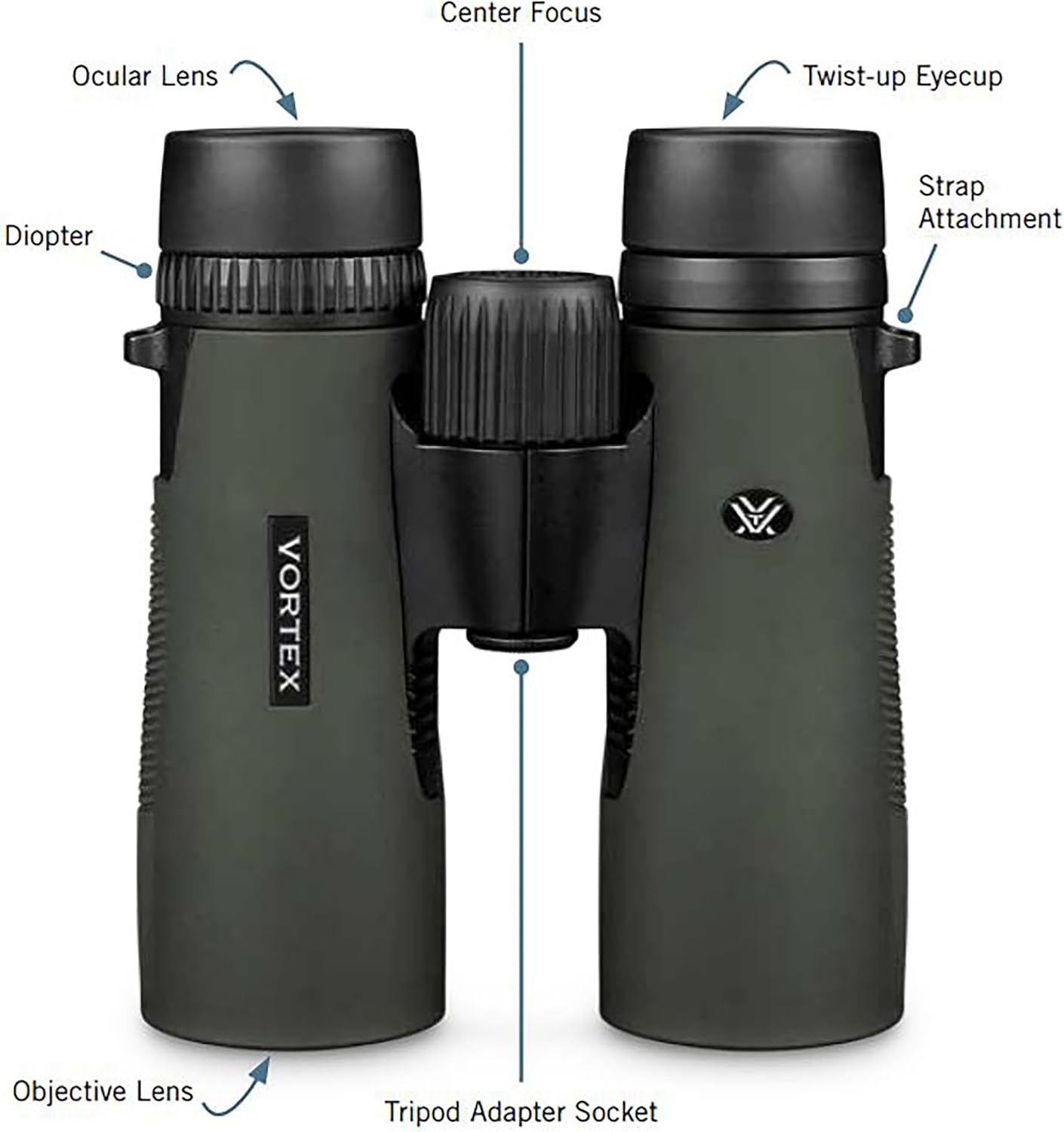
Vortex Diamondback HD 10×42
The Diamondback HD is often my first recommendation. It offers high-definition glass, a roomy field of view, and handles early morning fog and damp conditions well. Vortex backs these with their lifetime VIP warranty, which covers pretty much anything short of complete destruction.
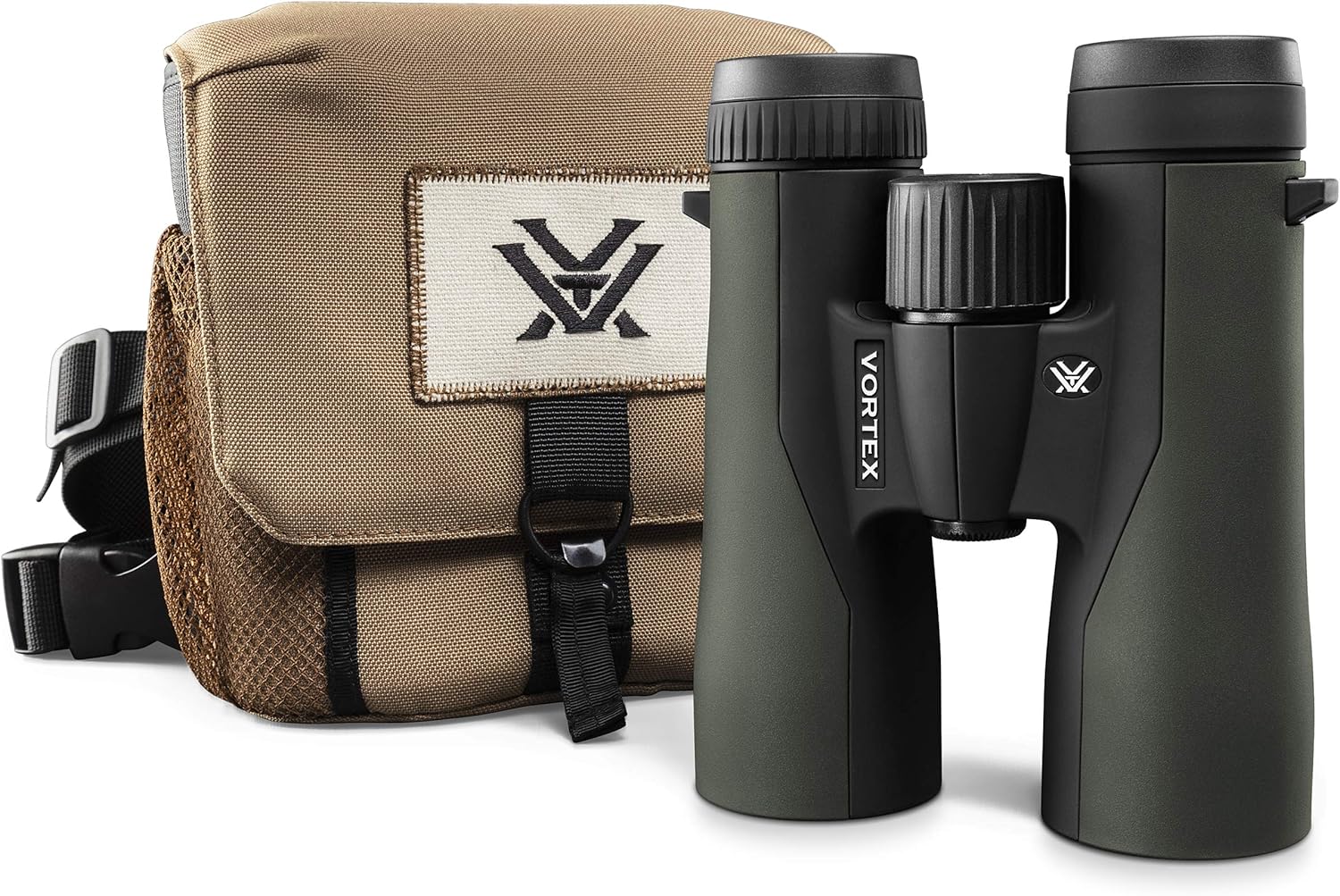
Vortex Crossfire HD 10×42
The Crossfire HD is perfect for those just starting. You get a clear, bright image thanks to its HD glass and a durable, rubber-armored shell that can handle getting knocked around. It includes a binocular harness, which helps keep them ready to use and prevents tangled straps.
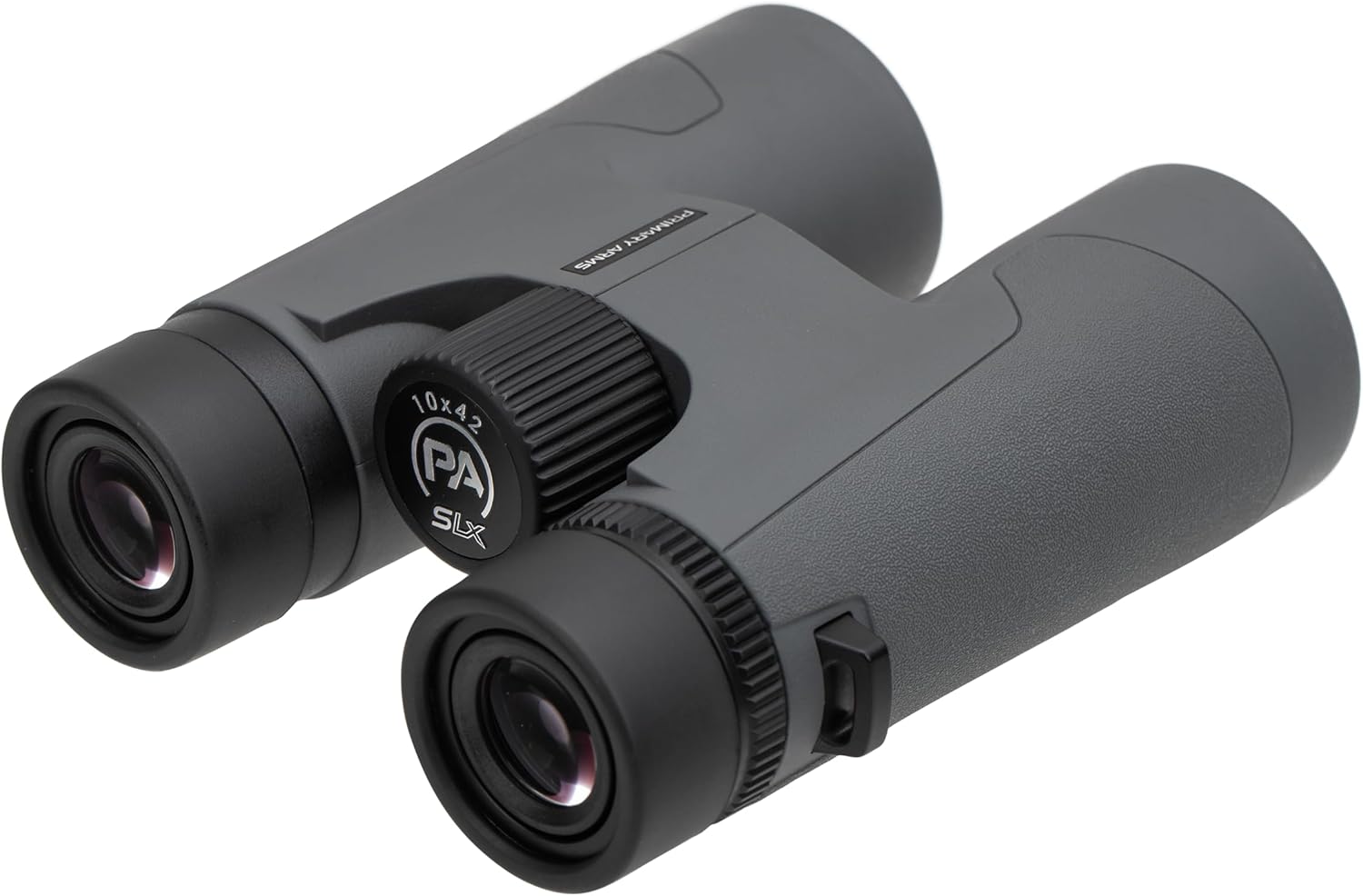
Primary Arms SLX 10x42mm
This model runs a bit cheaper but still features tough construction and multicoated lenses for solid brightness. If you’re on a really tight budget, I think this one lets you get out hunting without worrying about babying your gear.
I often run Diamondbacks in the whitetail woods when I want something light and dependable, and I’ve used the Crossfire and SLX models as spare sets in camp. All three deliver good image quality for the money, which lets you keep your main investment in other gear if needed. New hunters, or those who only hunt a few times a year, usually find this range absolutely sufficient for most North American game.
Mid-Range Picks ($400–$600)
Hunters looking to invest in even better clarity, lowlight performance, and comfort can find some strong options around $400 to $600. These typically use higher-grade glass, improved coatings, and thoughtful ergonomics for long hours in the field.
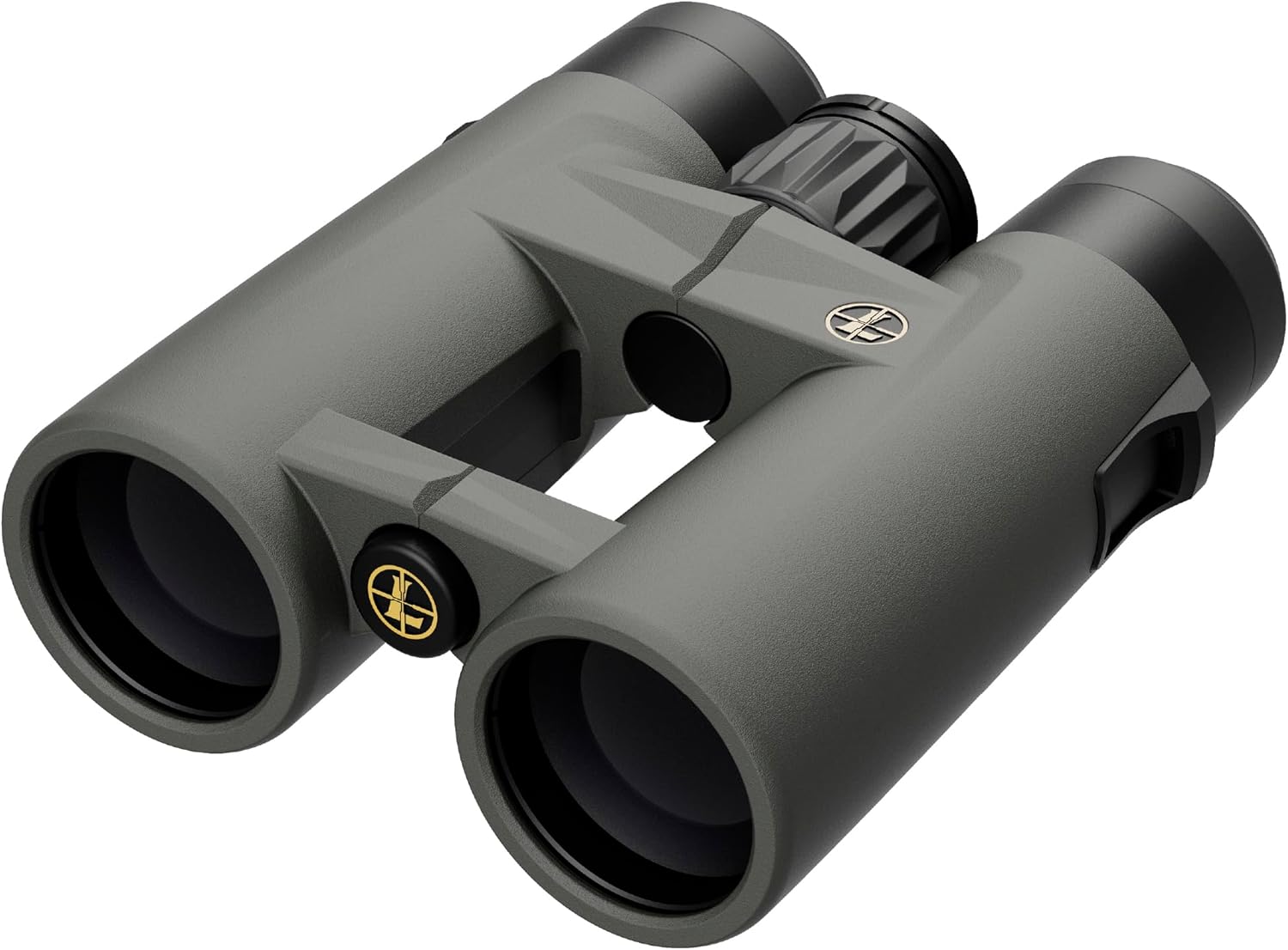
Leupold BX-4 Pro Guide HD 10×42 Gen 2
Their Elite Optical System brings in a lot of light, helping me pick antlers or game shapes out of shadowy backgrounds. The openbridge design is comfortable even when glassing for long sessions. Swappable eyecups mean that if, like me, you wear glasses, you get a good seal and full field of view.
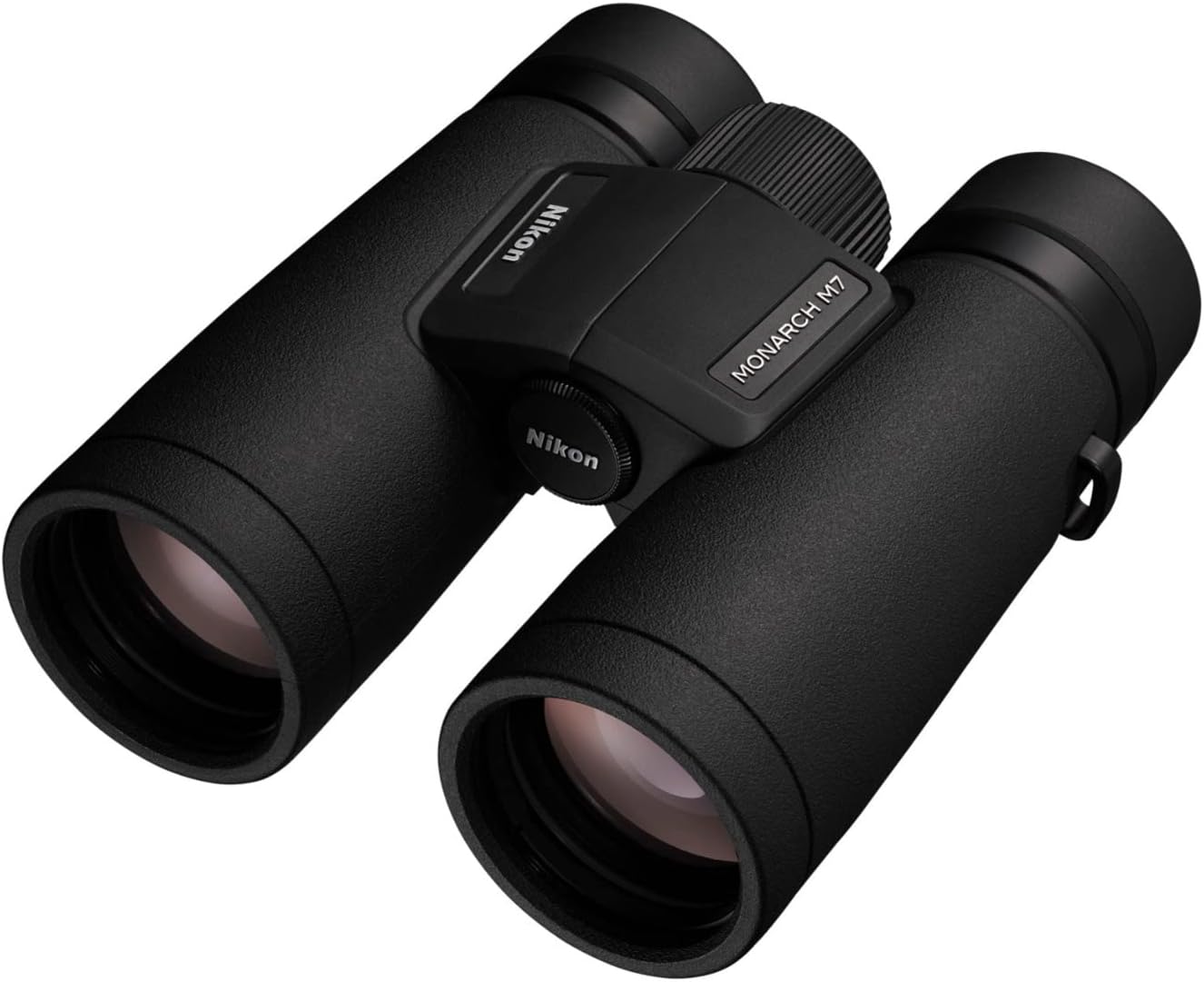
Nikon Monarch M7 10×42
The Monarch M7 lives up to its reputation as a tough, rugged all-rounder. ED glass cuts down color fringing, and dielectric coatings keep images bright and colors true even on dull, cloudy days. The Monarch series holds up well to repeated abuse, making it a reliable choice for backcountry hunts.
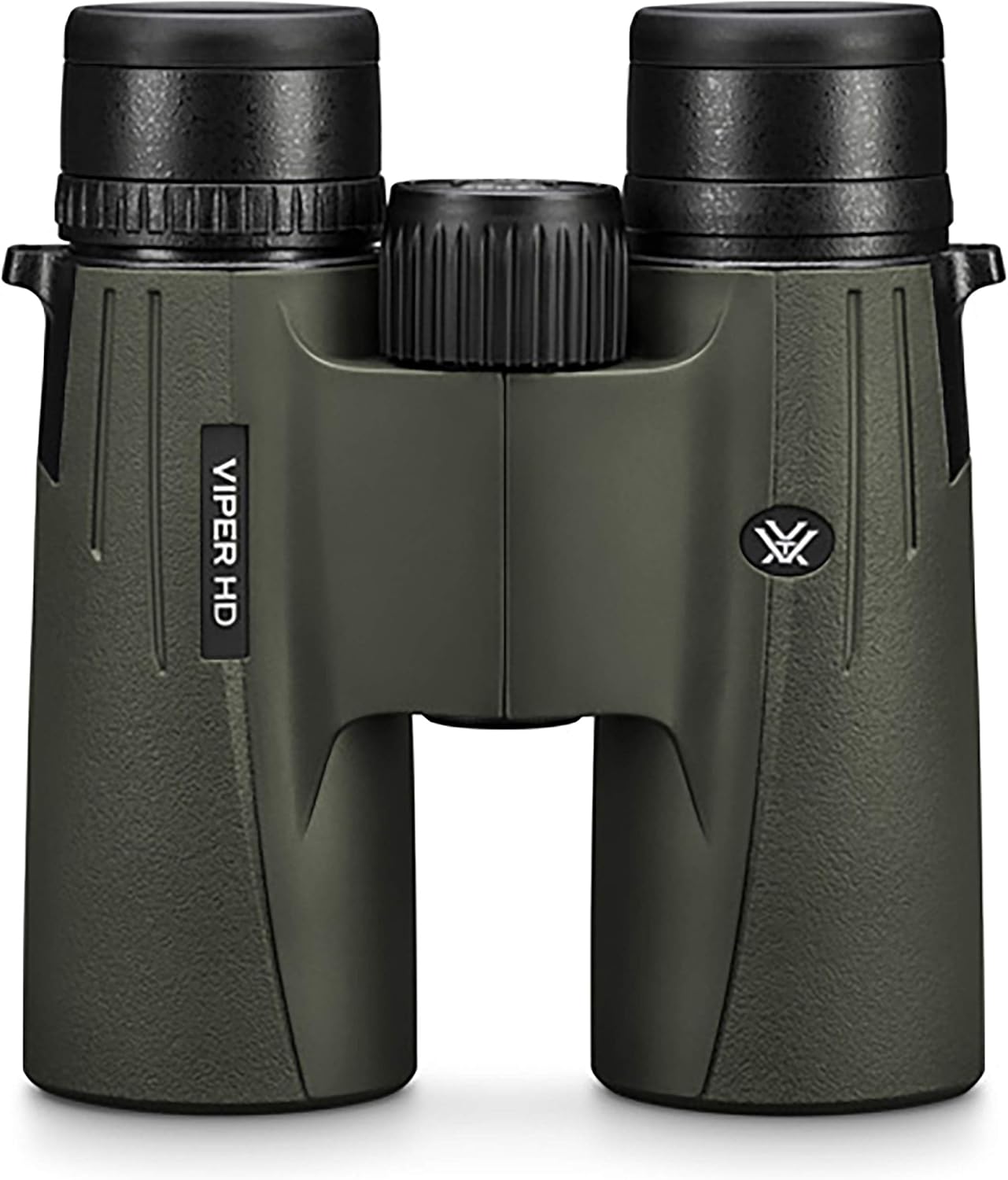
Vortex Viper HD 10×42
The Viper HD offers color fidelity and detail, which is impressive for the price, and the included harness is a nice bonus. Like the Diamondback and Crossfire, it comes with Vortex’s nearly no-questions-asked warranty, which is great if you tend to be rough on your optics.
Choosing from these midrange binoculars means you’re getting slightly more lowlight capability, better image sharpness, and more comfort for all-day glassing. I use these when heading out West for mule deer or elk hunts, where spotting distance and extended sessions behind the glass are common.
When hunts get longer and the terrain rougher, superior build quality, grip, and lens coatings from these picks really stand out. Keep in mind that spending a little more here can pay off season after season if you hunt hard or in tough conditions.
Choosing the Right Binoculars for Your Hunt
Selecting the most useful binoculars comes down to how you hunt, where you’re going, and your personal comfort preferences. Here are some key things I always consider:
- Magnification – 10x makes it easy to spot animals at longer ranges, which works well for open fields or Western hunting. However, 8x is steadier in the hand and often more practical for thick woods or stillhunting, giving a wider field of view and less handshake. Some bird hunters or those in extra-dense woods prefer 8x, while folks in open country may want 10x for longer range glassing.
- Objective Lens Size – Bigger lenses (such as 42mm or 50mm) gather more light, so you see game clearer at dawn or dusk. Smaller lenses make the binocular lighter to carry but slightly dim the image in low-light situations. For most, 10×42 strikes the right balance for general hunting. If you chase turkeys or sometimes spot targets in dense brush, a lighter or smaller objective lens model can offer comfort and quick draws out of a vest pocket.
- Water and Fog Proofing – Lenses fogging or water getting inside is a pain and can ruin your day. Sealed and nitrogen-purged binoculars handle weather swings without issue. Go for fully sealed options if you hunt from wet stands or in mountain regions where storms roll in often.
- Ergonomics and Weight – How a binocular feels around your neck or in your hands makes a real difference when covering miles or standing for hours. I always check the weight, grip texture, and how easy it is to adjust focus quickly. Some models now have openbridge designs or thumb indents for a more secure hold. Trying a model out in person can show you how it rides and fits into your kit.
- Warranty – Many top brands (such as Vortex and Leupold) offer unconditional warranties. This matters to me since hunting gear sees hard use, and accidents are just part of the deal. Some warranties are transferable, which is a smart perk if you plan to resell or gift gear later on.
It’s better to try out several models at a store when possible to see which fits your hands and eyes best. Small differences in fit and eye relief can really add up during a multihour hunt. If you can’t check models out in person, ask for feedback from friends or check in with hunting forums to get the lay of the land on comfort and durability.
Overcoming Common Challenges in the Field
Every hunting trip brings its own set of challenges. Here are some manageable issues I’ve run into while using different binoculars, and how I work around them:
- Fogged Lenses – This can often happen when you move from a warm truck to frosty woods. Models with openbridge designs and proper seals prevent this. Keeping a soft, dry cloth handy in your pocket helps clear lenses quickly if it happens. Some folks keep anti-fog lens cloths in their pockets for especially damp days.
- Neck Strain/Weight – Some 10×50 or larger binoculars can get heavy. Harness systems distribute weight across your shoulders, making it easier to glass all morning without a sore neck. Upgrading to a chest pack can also make carrying bulkier glass a lot more comfortable during long hikes.
- Low Light – Not all glass handles first or last light well. Models with ED or HD glass and proper coatings make details pop even when visibility drops. Spending a bit more for these upgrades can be worth it if you often hunt at dawn or dusk. Consistent practice in different light levels teaches you what works in your local woods and for your eyes.
Some hunters find focusing in cold conditions tough with gloves on. Looking for focus wheels with a bigger surface or an easy-to-grab texture will improve usability in late seasons. Don’t skip out on checking lens covers, too; dropped covers are a real hassle, so models with secure tethers are a smart pick.
Making the Most Out of Your Binoculars
Getting the best use from your binoculars goes beyond picking the right pair. I keep my lenses clean, use a harness to keep them ready, and regularly check seals and straps before heading out. You can get cleaning kits or simple lens wipes to remove dirt, rain spots, and even pine sap, which builds up over a season.
Regular care helps these tools last for years, even with frequent trips and rough use. If your binoculars are getting sticky or the adjusting wheel is stiff, a quick cleaning and a bit of care often brings them back to life. My best tip for spotting game is to practice glassing slowly and methodically.
I break the field into grids and work from left to right, letting my eyes rest frequently to avoid fatigue. Also, learning how animals move or blend in can be just as important as any tech feature your binoculars have. If you want to really improve, try glassing with friends and compare notes on spotted animals; you’ll get a sense for movement and terrain that you might miss solo.
If you hunt multiple states or trip out west, take a second to double-check that your harness, lens covers, and cleaning gear are all in order before leaving home—a few small tips can save your field time and boost your odds. As with all hunting gear, the little routines make big differences over time.
Frequently Asked Questions
Are expensive binoculars really worth it for hunting?
In my experience, spending more gives you some gains in sharpness, edge-to-edge clarity, and brightness in tough light. However, today’s midrange and affordable models like those listed above perform more than well enough for most hunters. If you’re careful with your gear and don’t need world-class optics, good budget binoculars will serve you well.
What’s better: 8×42 or 10×42 for hunting?
10×42 is a favorite for big Western hunts and open ground, while 8×42 is often easier to hold steady and shows a wider slice of landscape in dense woods. I usually choose my magnification based on the type of terrain and how far I plan to be glassing. You can’t go wrong with either if you pick solid build quality and coatings. Trying both if you get a chance is a good way to see which fits your style best.
How do I care for my binoculars to make them last?
I always store mine in a dry spot at home and keep them in a padded case during travel. Cleaning the lenses with a soft brush and microfiber cloth keeps grit away and prevents scratches. Avoid leaving them in places prone to excess heat or moisture when not in use. It’s wise to do a quick pre-hunt check at the start of each season for any loose parts or dust inside the barrels.
Final Thoughts on Best Hunting Binoculars for the Money
Paying attention to real-world needs and comparing features ensures you find hunting binoculars that match your style and budget. Whether you want an all-around model or something rugged for long trips, plenty of value-packed choices can make spotting more reliable and enjoyable every season. Smart shopping and just a bit of care mean your binoculars will be a steady partner for years to come.
Most Recent Articles:
- Off-road Vehicle Recovery Techniques
- Electric Vs. Manual Game Calls and Which Works Better?
- Comparing All-Terrain UTV Winches For Remote Hunting Access
- How To Create Wildlife Bait From Kitchen Scraps

- Reliable Trail Camera Rigs For Hunters On A Tight Budget
- Suburban Bowhunting Tips

As always, stay safe, enjoy the journey, and please try to leave it cleaner than you found it. If you have any comments, questions, ideas, or suggestions, please leave them in the comment section below, and I’ll get back to you ASAP. You can follow us on YouTube: Man Art Creations for videos of our DIY Adventures.
P.S. Thanks so much for checking out our blog; we really appreciate it. Just so you know, we may receive a commission if you click on some of the links that appear on our site. This helps us keep our content free and up-to-date for everyone. We appreciate your support!